

How Is AI Used In Phishing?
Phishing is a form of cyber attack where attackers disguise themselves as legitimate entities to trick individuals into revealing sensitive information. Commonly, phishing attempts arrive via email, instant messages, or fraudulent websites that closely mimic trusted services.
AI phishing uses artificial intelligence to create more sophisticated and convincing scams, such as personalized emails, realistic voice clones, and deepfake videos. These attacks leverage AI to analyze personal data and mimic legitimate communications, making them harder for individuals to detect than traditional phishing attempts.
Here are the primary ways AI is used by attackers to design more dangerous phishing attacks:
- Personalized content: AI can scour public data like social media to generate highly personalized and convincing phishing messages that seem to come from a known contact, like a boss or family member.
- Realistic impersonation: Modern multimodal AI can generate realistic audio and video, including deepfakes, to impersonate individuals and trick victims into providing information or money.
- Evading detection: Generative AI can create phishing emails that are grammatically correct and may even use AI-generated code to disguise malicious content, making it harder for traditional detection methods to flag them.
- Multimodal attacks: AI can combine different data types, like an impersonated brand’s logo from an image and text from a website, to create a more realistic attack.
This is part of a series of articles about website security
In this article:
- The Evolution of Phishing Before and After Generative AI
- How AI Is Used in Phishing
- Types of AI Phishing Attacks
- Best Practices to Mitigate AI-Enhanced Phishing
The Evolution of Phishing Before and After Generative AI
Before generative AI, phishing attacks relied heavily on manual effort or simple automation. Attackers used mass email campaigns with generic messages and poor grammar, making them easier to detect. These early attempts often targeted a broad audience, hoping a small percentage would fall victim. Custom phishing (tailored messages for specific individuals) required significant time and knowledge, limiting how often it could be used.
The emergence of generative AI has transformed this landscape. Attackers can now craft convincing, personalized phishing messages at scale. AI models can generate well-written content in any language, simulate the tone and style of real individuals, and even replicate organizational communication patterns. This reduces telltale signs of phishing, like spelling errors or awkward phrasing, increasing the likelihood of success.
Additionally, generative AI can assist in automating reconnaissance. Tools powered by AI can scan social media, company websites, and public data to extract personal or organizational details, which attackers then use to build more targeted phishing campaigns. This capability blurs the line between mass and targeted attacks, enabling large-scale spear phishing with minimal effort.
How AI Is Used in Phishing
Personalized Content
AI allows attackers to gather and analyze publicly available data about individuals from social media, professional platforms, and previously leaked data breaches. With these insights, generative AI tools can compose messages that reference recent events, personal interests, or organizational details specific to the target. This level of personalization increases the likelihood that targets will believe a phishing message is genuine and respond.
Beyond text, AI can mimic communication styles or adapt tone to match a target’s background. For instance, a phishing email to a company executive might use industry jargon and reference business events, while a message to an individual could reference hobbies or personal events. These nuances make traditional detection based on generic phrasing or mass-mailing behavior far less effective than in the past.
Realistic Impersonation
Generative AI technologies can create content that closely mimics the style, tone, and formatting used by specific individuals or organizations. Attackers feed examples of legitimate communications into language models, which then generate highly convincing fake messages imitating CEOs, colleagues, vendors, or institutional voices. This helps the phishing emails bypass suspicion, even among vigilant recipients.
AI has also enabled attackers to automate large numbers of impersonated messages rapidly. Unlike hand-crafted phishing campaigns that were time-intensive, malicious actors can now scale up their impersonation campaigns with minimal effort.
Evading Detection
AI-powered phishing campaigns can produce messages that bypass traditional security filters. By generating unique phrasing, varying linguistic patterns, and mimicking legitimate correspondence, generative AI undermines signature-based email security tools. Each message slightly differs from the next, making it harder for automated systems to recognize and block them at scale.
Attackers further use AI to analyze which variations fail or succeed, iteratively refining their approach. Some models are even trained to anticipate and evade defensive solutions specifically, testing content against anti-phishing engines before real-world deployment. This constant adaptation increases the resilience and longevity of phishing campaigns.
Multimodal Attacks
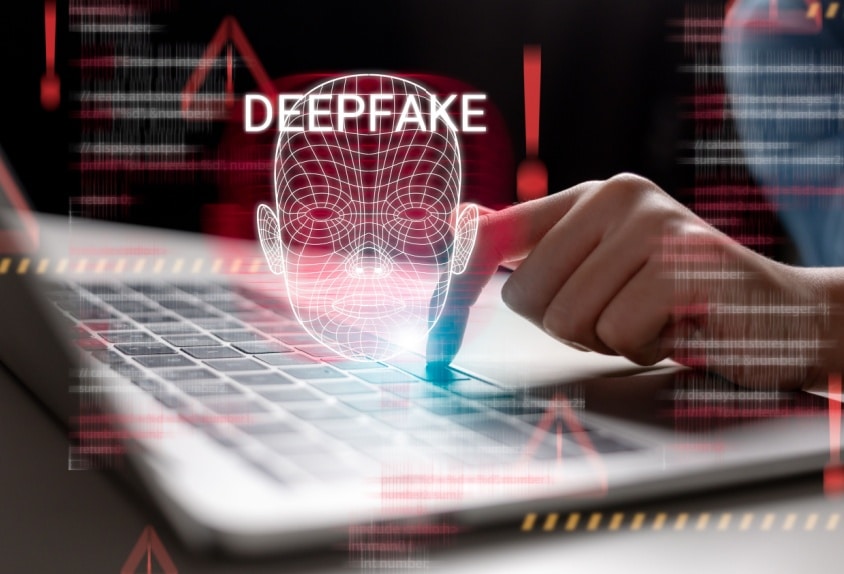
Generative AI enables attackers to create not only realistic text but also audio and visual content. For example, deepfake technologies generate convincing voice clips or videos, allowing phishers to impersonate executives or support staff in phone calls or on video conferences. These attacks go beyond traditional email, leveraging the growing reliance on remote collaboration tools and digital communications.
Multimodal phishing attacks can also combine various media to appear more authentic and overwhelm traditional security layers. Attackers might follow up a phishing email with a convincing AI-generated voice call, or embed deepfake images or documents within their correspondence.
Types of AI Phishing Attacks
1. Deepfake Video Calls
Deepfake video calls use generative AI to create synthetic visual likenesses of real individuals, often company executives or trusted partners. Attackers set up live or pre-recorded video chats where the target sees a realistic avatar mimicking voice, facial expressions, and mannerisms. These calls can trick employees into authorizing fund transfers or divulging confidential information, believing they are speaking with a legitimate contact.
The threat from deepfake video calls is compounded by the ability to tailor each interaction in real-time, adjusting responses based on the target’s questions or reactions. Organizations that rely on video conferencing for approvals or sensitive communications are at higher risk, as attackers use convincing visual deception to bypass typical authentication cues and trust-based verification methods.
2. AI-Powered Voice Phishing Scams
AI-generated voice cloning allows attackers to mimic the voices of executives, co-workers, or business partners with remarkable accuracy. Using a relatively brief audio sample pulled from public sources or previous conversations, attackers can quickly produce lifelike phone call or voicemail impersonations designed to extract sensitive information or prompt urgent financial actions.
This technique, also called “vishing,” takes advantage of our tendency to trust familiar-sounding voices and the sense of urgency often created in voice communications. Traditional safeguards such as caller ID or voice recognition by staff can be circumvented by these advanced AI-driven attacks, requiring new strategies for validating requests received via phone.
3. Polymorphic Email Attacks
Polymorphic email attacks leverage generative AI to create large volumes of phishing messages with unique text, structure, and formatting for each recipient. By constantly altering subject lines, body copy, even embedded images or links, these attacks evade spam filters and detection systems that rely on identifying common signatures or patterns.
This dynamic variability means every iteration of a phishing email can appear genuinely distinct, reducing the risk that a mass campaign will be flagged. Attackers also employ AI to monitor which versions receive more engagement, refining their approach in near real-time to further increase the effectiveness and reach of their campaigns.
4. Phishing Websites Generated via AI
AI-driven tools now automate the generation of phishing websites that closely mimic the appearance and behavior of legitimate login pages. These sites can be created en masse, each fine-tuned to match the branding, layout, and even URL patterns that victims expect to see, making them hard to distinguish from genuine sites without careful scrutiny.
Some AI-generated phishing sites dynamically adapt to the victim’s input or device, presenting different login portals based on detected organization, language preferences, or even prior browsing history. This adaptability also complicates detection efforts, requiring organizations to strengthen their monitoring for fraudulent domains and lookalike sites.
Best Practices to Mitigate AI-Enhanced Phishing
Here are some of the ways that organizations can better protect themselves against AI phishing attacks.
1. Leverage In-Browser Security
Modern web browsers support advanced security features that can help detect and block phishing attempts before users interact with malicious content. Deploying browser-based security controls, such as real-time site reputation checks, malicious link detection, and script-blocking, offers proactive protection, especially as AI-generated phishing websites often evade email security layers.
Organizations should enforce browser security policies and automate updates to keep defenses effective against evolving AI-driven threats. Complementing browser security tools, organizations can use web isolation technology to run unknown or risky web content in secured environments. This restricts the impact of successful phishing attempts, preventing malicious scripts or downloads from reaching end-user devices.
2. Deploy AI-Augmented Email and Messaging Security
To counter AI-powered phishing, defenders must adopt their own AI-driven detection and protection tools. AI-powered email security platforms analyze incoming messages for context, intent, and linguistic cues, identifying anomalies that traditional signature-based filters might miss. They excel at recognizing personalized attacks and polymorphic threats by rapidly comparing message content and structure across massive datasets.
In addition to email, organizations should extend AI-driven security platforms to instant messaging and collaboration tools, where phishing and social engineering are increasingly prevalent. Integrating AI with user behavior analytics further improves detection accuracy by flagging suspicious account activity.
3. Implement Continuous Phishing Simulations with Adaptive Difficulty
Regular phishing simulations are essential for assessing and improving employee resilience against evolving attacks. By utilizing AI to generate realistic, adaptive phishing exercises, organizations can closely replicate real-world scenarios, including highly personalized and sophisticated messages. This helps employees develop the critical thinking and vigilance needed to spot even advanced phishing attempts.
Simulations must be ongoing and dynamically adjusted in difficulty based on employee performance and emerging attacker techniques. Adaptive testing ensures that users aren’t just prepared for the last wave of attacks but are trained to recognize new tactics as they appear. Results from these exercises should inform targeted training, closing identified gaps.
4. Enforce Strong Identity Verification for Voice and Video Communications
With the rise of deepfake and AI-powered impersonation attacks, robust identity verification procedures are critical for sensitive voice and video communications. Employ multi-factor authentication (MFA) before acting on financial requests or sharing confidential information via phone or video call. This could include out-of-band verification methods like separate messaging, secure applications, or known contact numbers to confirm identities.
Organizations should develop clear protocols for validating requests over these channels and educate staff on recognizing signs of AI-mediated impersonation. Employees should be able to question unusual requests without fear of retribution and equipped with escalation procedures to verify authenticity, especially for high-stakes or time-sensitive transactions.
5. Harden Authentication Workflows Against AI-Generated Attacks
Traditional authentication measures, such as passwords or basic security questions, are no longer sufficient in an environment with advanced AI phishing threats. Organizations should accelerate adoption of strong authentication frameworks, including hardware security tokens, biometric verification, and adaptive risk-based authentication that responds to anomalies in access behavior.
In parallel, limit privileges and enforce the principle of least privilege for access to sensitive systems. By applying zero trust principles, organizations can minimize the damage from compromised credentials, reducing the likelihood that AI-assisted phishing can lead to broad network or data access.
6. Establish Rapid-Response Playbooks for Suspected AI-Phishing Events
Effective incident response is crucial in minimizing the impact of successful phishing attempts, especially when attackers use AI to move quickly or automate their campaigns. Develop clear, actionable playbooks that outline steps for containing, investigating, and remediating suspected AI-enhanced phishing incidents. These playbooks should specify roles, escalation paths, communication protocols, and post-incident review procedures.
Regularly test and refine response plans through tabletop exercises and simulated attacks to ensure all team members can identify and act swiftly in the event of an incident. Immediate containment and transparent communication, informed by clear playbooks, are key to preventing small breaches from escalating. Lessons learned from each incident should be fed back into training and defense strategies.
AI Phishing Protection with Seraphic Security
Seraphic turns any traditional or AI browser into a secure enterprise browser, inspecting every session for phishing indicators such as suspicious domains, fake login pages, and credential-stealing flows. By working inside the browser engine, it can block phishing pages as they load, including those powered by generative AI or advanced phishing kits.
Seraphic’s Secure Enterprise Browsing (SEB) platform uses machine learning and behavioral analytics to spot anomalies in how users interact with web content, AI tools, and authentication flows, flagging AI-crafted phishing attempts in real time. This includes enforcing identity-aware, zero-trust policies that continuously verify risk signals during browser sessions, reducing successful credential theft.
Seraphic applies fine-grained controls over what users can type, paste, upload, or download when using GenAI tools and AI browsers such as ChatGPT Atlas, blocking data exfiltration via AI phishing prompts. These protections extend to managed and unmanaged devices, giving security teams centralized policies and visibility across AI-driven browsing.
About the Author